

Blacks in fisheries
For Black History Month, I'm reflecting on my experience as a Black woman in a niche profession, and some views of the past, present, and future of Black people in seafood and fisheries

Hi! We’re Fish Forward - a collaborative featuring folks tied to the oceans and the seafood it provides, chefs making seafood approachable to buy and cook at home, and artists inspired by the sea. Subscribe to our newsletter for lessons on sustainable fisheries management and seafood sourcing, recipes, and stories about the communities who connected with the ocean.
This is a post I wrote for Black History Month — a reflection on my work as a black woman in fisheries management.
I’m likely the first Black woman appointed by the U.S. Secretary of Commerce to serve on a federal fisheries council. There are eight regional councils responsible for managing fish stocks in U.S. waters. I say “likely” because the federal government doesn’t actually collect demographics on this, so I can only guess based on what I know of my Council’s current membership and what I’ve seen across the country, including the Caribbean Council. The fact that we don’t track this data is itself revealing. Most of our readers won’t know how significant this is, but this is a massive honor and a career aspiration that was far out of reach for me. I got there way earlier than I expected, in spite of a lot of forces working against me, and am really proud of myself.
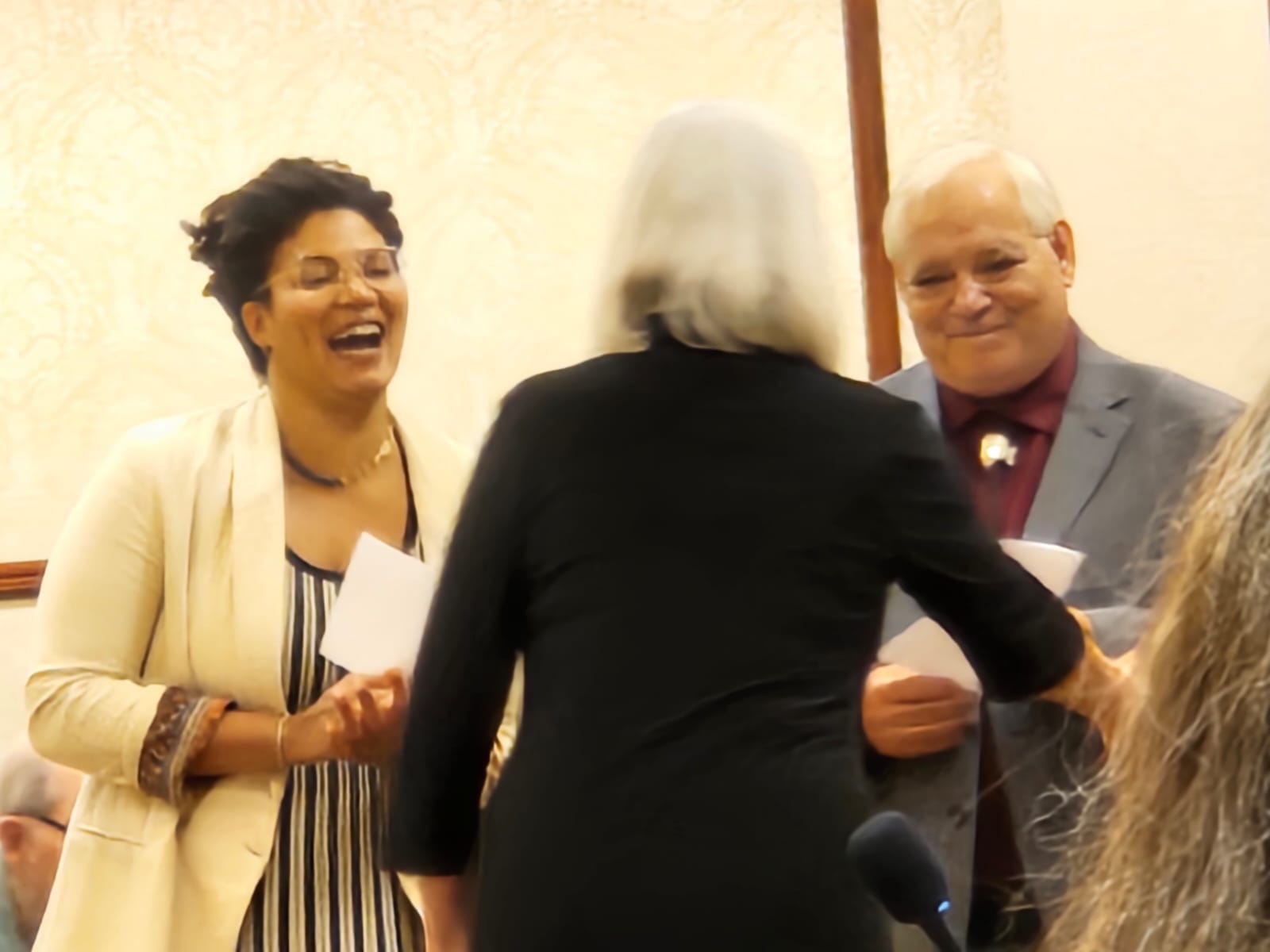
My love for the ocean started differently than most of my peers in fisheries management. I went to the ocean a lot as a child, but not the way you might think. I tagged along on trips with my grandmother, who was nannying for wealthy families. Basically, I was a nanny’s assistant. That’s how I got to spend time at and become intimate with the shore. I also went on family trips to the Caribbean when I was little, and later, I had a best friend whose family went to the ocean frequently, so I joined them.

It’s been hard to find other people who have a story similar to mine. Being near the ocean was not something my family got to experience as leisure. The experience wasn’t something they owned in the way that a lot of people I work with professionally or leisurely experience the ocean. There’s a particular relationship with the water and nature that comes from choosing to be there, from generations of boat ownership or beach houses or summer traditions. That wasn’t my entry point.
The ocean doesn’t belong to any of us, but access to it — the ability to build relationship with it, to make decisions about it, to benefit from it — that’s been unevenly distributed. Some of my most formative experiences on the shore were supporting my grandmother so other people’s children could play there. Now I’m in rooms where we decide how millions of Americans can access food from those same waters.
The body of literature about Black experiences with nature is growing. I’m reading a book right now that comes closest to mirroring my experience: Erin Sharkey’s edited collection of personal and lyric essays A Darker Wilderness: Black Nature Writing From Soil to Stars. Carolyn Finney’s introductory essay for this book “revisits her family’s intimate relationship to a piece of land that was deeply theirs, while at the same time, not their own.” I feel this — loving and revering and healing through something you don’t feel like you experienced through leisure or ownership. But in truth, that itself is an experience, and the healing impacts of nature are no less potent. It’s something we should document and be proud of.


Sharkey’s book and others have made me deeply curious about the experience of black people catching and cooking seafood in the United States. I’m excited to start researching this more seriously. I don’t know where that research will go yet, or what it will reveal to me. However, I don’t think there are many people who have experienced United States fisheries policy the way I have as a black woman, and there are some really unique challenges coming that I’d like to document from the perspective of people who share my identity.
For Black History Month, I want to share some past and present stories of black people in fisheries. Many of the stories are in the U.S. South, but I’m hoping to find more from around the nation. I also want to share my imagined future for diverse participation in fisheries.
Blacks in fisheries - Past
Once I started looking, it made sense that I would find a lot about black involvement in fishing and seafood processing. Enslaved Black people were brought to this country in boats, across the ocean. Many of them had relationships to the ocean in their homelands, and ended up in the first coastal settlements, which relied on the sea for sustenance.
Around Substack, I’ve been enjoying reading David A. Benoît’s substack Make the Roux Already. David does sweeping historical series on the iconic foods of Louisiana. I urge you to check out the set of posts on Shrimp and Okra Gumbo:
Gumbo grew out of that meeting of waters and cultures, where African, Indigenous, French, and Spanish traditions settled into a single pot. Few dishes could have emerged anywhere else, tied to the season, the land, and the long memory of the people who tend both…Every bowl carries threads of West Africa, Indigenous America, France, Spain, and the Gulf Coast. You don’t study this history the way you study dates on a page. You taste it. You feel it in the way the broth settles, the way the okra softens, the way the shrimp announce the salt water they came from.

One other offering that caught my eye because of its use of archives and imagery is Robin Caldwell’s article “Black Women in Seafood: The History & Heritage.”


Enslaved Black women peddled fish and shellfish. Some worked on behalf of the planters who enslaved them, and were allowed to keep a portion of their profits to buy their freedom selling in wharf markets and on the periphery of the French Market in New Orleans. Charleston’s “Oyster Woman” Mary Purvis was a free woman of color vending oysters on the streets in the late 1850s and early 1860s. Purvis is listed as a “huckster” in an 1860 city directory, which means she had suppliers as well as a clientele to purchase her wares.
The work in commercial fishing was often back-breaking but it enabled women and men to not only buy land and build homes, but they were able to build sustainable communities with their own schools, stores, and institutions. While underpaid for their goods and services, these people made much of little, performing jobs some white laborers and owners found menial.
Blacks in fisheries - Present
The present-day Black experience in U.S. fisheries is a story of contrast. There’s underrepresentation and bright presence, like through the fishermen I present below.
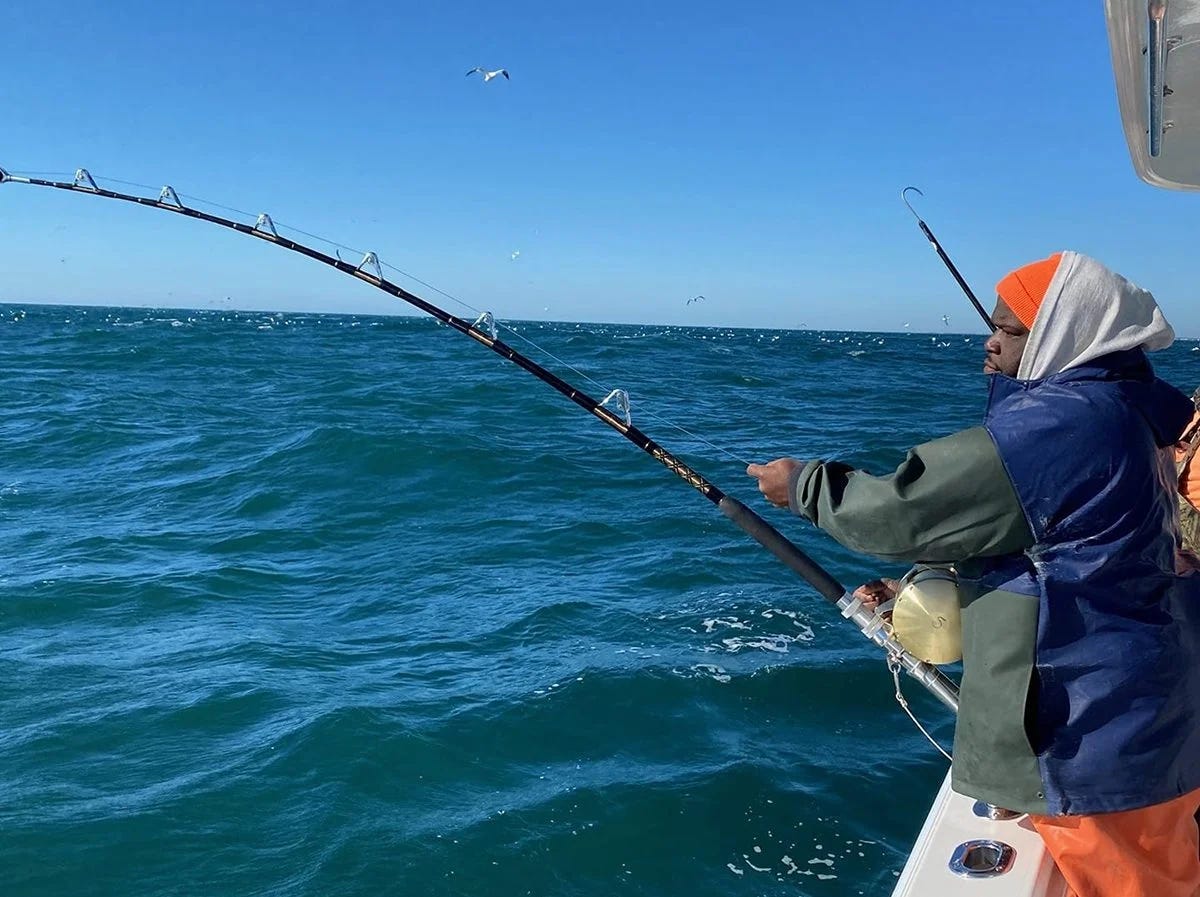
This Coastal Review article features John Mallette, a black commercial fisherman, for-hire recreational charter captain, and co-owner of Southern Breeze Seafood in Jacksonville, NC. John says in the article:
There’s a lot of things people just don’t understand. There’s so much that people don’t know and there’s a lot of stereotypes that were passed down generation after generation that, unfortunately, push African Americans away.”
Like the stereotype that Black people can’t swim, he said, that’s led to a cycle of African Americans working in the fish houses but not on the boats.


This PBS article features Captain Fredrick McBride, who “believes he’s the only Black commercial fisherman on the Texas coast.”
“I’d never really thought about doing any commercial fishing, and the reason why is because I’d never been exposed to anything like that,” recounts McBride. “Nobody ever told me, ‘You could probably make some money doing commercial fishing.’”
McBride loves the freedom of fishing — the quiet solitude of focusing on the day’s catch, the opportunity to learn and study different fish along the coast. He’s also well aware of the oddity of his field. While he grew up with Black family members recreationally fishing, those who seek a commercial license — like he did — tend to be white.
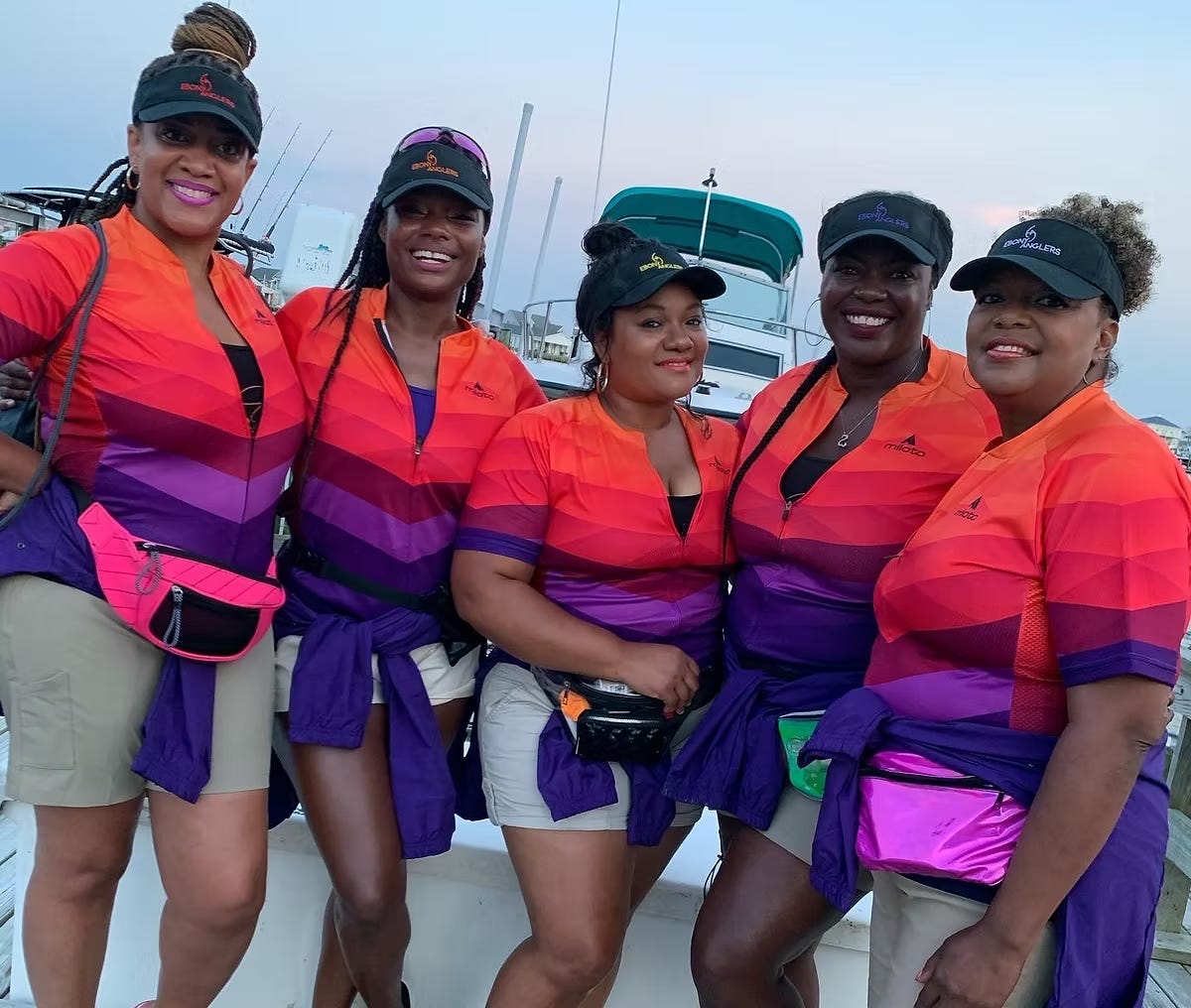
Finally, one of my favorites. I found a group called Ebony Anglers, a group of “five professional Black women in North Carolina who embrace the sport of competitive fishing while balancing family, motherhood, and business.” AHHHHH they are gorgeous!
Blacks in fisheries - Future
Oh the future. I’m scared for what is coming with climate change, but it could be an opportunity if we play it right. I hope Black people have the opportunity to relax near the sea on their own terms, to fall in love with the ocean and seafood the way that I did. I hope young Black people can envision themselves working in ocean sciences because they see themselves represented there, through groups like Blacks In Marine Science (BIMS) and Black Women in Ecology, Evolution, and Marine Science (BWEEMS). And I also hope young Black people see more Black fishermen, both commercial fishermen and people who fish for fun. I hope that through governance, we create space for Black and brown people to choose commercial or recreational fisheries as a profession, and that there are more Black and brown people at the decision making table, like me. I hope that there aren’t more people like me and Captain McBride, who suspect they’re the only Black person around gazing out from the shore.
I can’t wait to research this more.
What a wonderful piece on a topic I feel like we hear so little about. I am reminded about passionate pleas from some corners of fisheries management about the importance of preserving fishing heritage of fishing communities. When choosing to do that I wonder whose heritage (and whose access to these precious resources) we're protecting and who's exclusion we are perpetuating. I hope we continue to see people with new types of personal experiences and connections to fisheries participate and serve in leadership positions at fisheries councils and commissions. I am grateful your voice is part of the mix.
Thanks for sharing this great info and highlighting all these folks' stories. I'm curious about the Caribbean. There is no Caribbean land or culture without the ocean! And there is a dense population of black people. Are there black fisheries leaders in the Caribbean, or with strong roots from the Caribbean?